Prince of PersiaClassic
The Classic Prince of Persia Games: 1989 Original and Sequel
Two games from Jordan Mechner's era define the series before it moved to 3D: the 1989 platformer and its 1993 follow-up. Each has its own page.
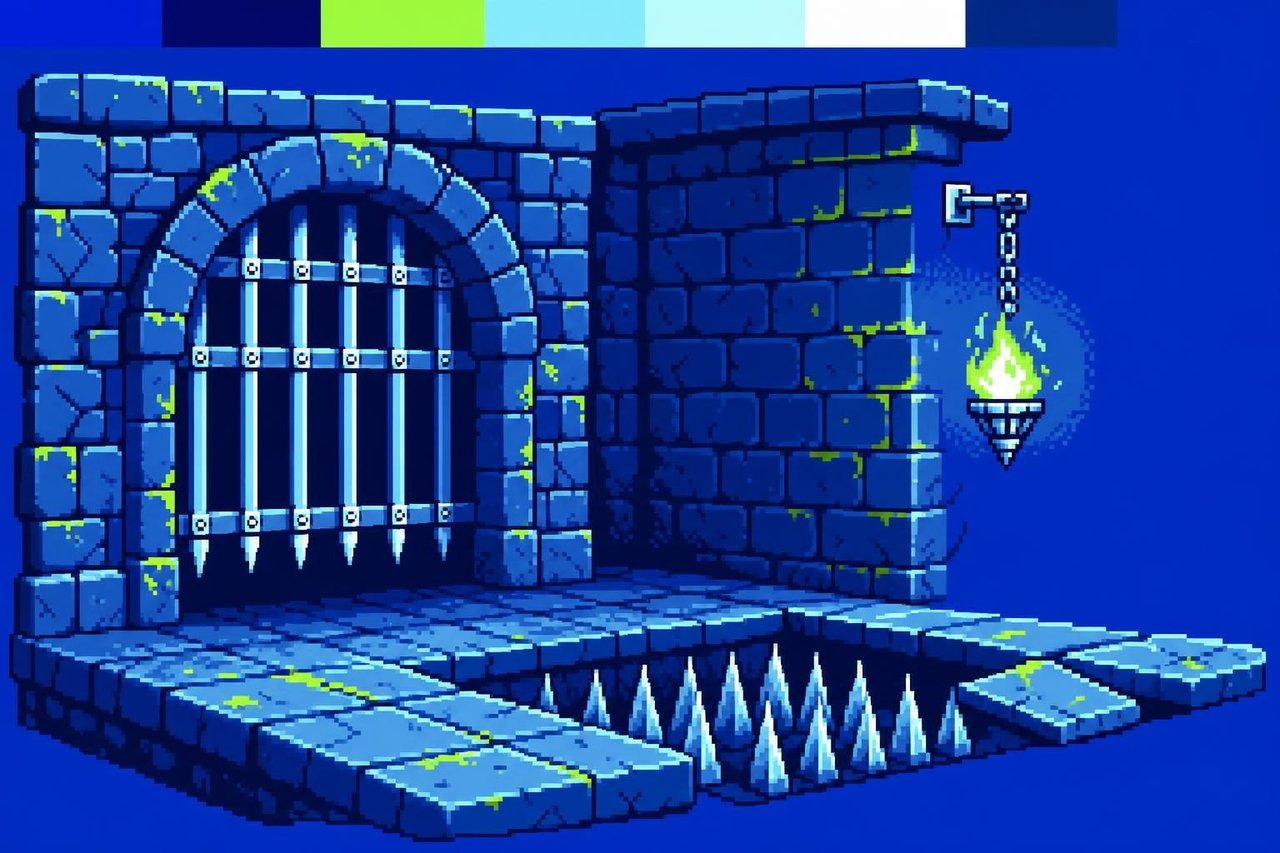
The first Prince of Persia reached the Apple II in October 1989 and made a name for itself through animation that looked closer to film than to the arcade games around it. Its sequel, The Shadow and the Flame, came to MS-DOS in 1993. Between them they make up the classic era of the series, and most of what fans edit, emulate and recompile today comes from these two games.
The page on the 1989 original follows the game from its Apple II start through the DOS release and the long list of ports, and notes where they diverge. The page on the 1993 sequel covers the story, the heavier combat and the level obstacles worth planning for.
Both games store their pictures, sounds and levels in resource files that fan tools can open; the DAT file format page explains how. To run either game on a current machine, see ways to play. The later history of the series, including the cancelled Sands of Time remake, is on the remake page.
The two games side by side
The 1989 game is the tighter of the two. It is built around twelve levels and a sixty-minute limit, with a movement system of climbing, jumping, running and careful ledge work, and a sword fight against a single guard at a time. The 1993 sequel keeps that movement system and widens everything around it: more levels, a seventy-five minute limit and rooms that can hold several enemies at once.
For modders the difference matters less than the similarity. Both games keep their data in files that fan tools understand, which is why the same editors and the same reimplementation, SDLPoP, come up on the modding tools page for one game after the other. Readers who want a first session can pick the original and follow the route on the play page.
What the classic pair left behind
The classic games shaped more than the series. The 1989 original showed that animation traced from filmed movement could make a platformer feel physical, and the sequel showed how far the same movement system could stretch when the rooms around it grow larger and more crowded. Both were built on small data files and simple rules, which is also why they have been taken apart, documented and rebuilt so many times.
That history explains the layout of this site. The reference pages describe the games as they were released, the format pages describe how they store their data, and the software pages describe what fans built on top of both. A reader can enter from any of them and reach the others through the links on each page. Readers comparing the two games for modding will find the same pattern in both: a small set of resource files, a movement system that rewards careful timing and a community that documented the formats long ago. The software page lists the tools that work with them, and the format pages explain what those tools read and write.
Where to go next
Readers new to the series can start with the 1989 game and read its ports section before choosing a version. Those who already know it can jump to the sequel for the story and the level guide. Players stuck on a particular stretch will find route help in the Prince of Persia walkthrough, and the cheats page covers the built-in keys.
The classic era is also the part of the series where the data files matter most. Everything a modder touches, from sprites to level layouts, sits in files described in the file formats section, and the tools that edit them are on the software page.
Frequently asked questions
Who made the classic Prince of Persia games?
Jordan Mechner designed both. He also wrote the code for the 1989 game, which Broderbund published, while the 1993 sequel was designed by him but programmed by others. Broderbund published both.
Which one should a newcomer start with?
Most players start with the 1989 game, since the sequel assumes familiarity with its controls. The original is shorter, with twelve levels and a sixty-minute limit. The sequel has more levels, more enemies per room and a seventy-five minute limit, so it demands more from a player.
How are the two games connected?
The 1993 story starts eleven days after the end of the first game. The prince, newly celebrated, is tricked out of the palace by the vizier Jaffar, who returns in the sequel. The movement system carries over, while the setting, the combat and the structure of the levels change.
Are later games in the series covered here?
Only the classic pair is covered on these pages. The 3D games from 1999 onward are separate productions, and the planned Sands of Time remake has its own page, which explains why it was cancelled and where the series stands.